
Flagship youth programme
Global South GenZ Fellowship
Young solvers, real problems, shared futures.
A university-anchored, problem-first fellowship that places young people from the Global South at the centre of the work the world's shared challenges demand: real data, working models, research and products, a recognized credential, and a stage worth reaching.

The model
One cohort, twenty groups, three mentors each
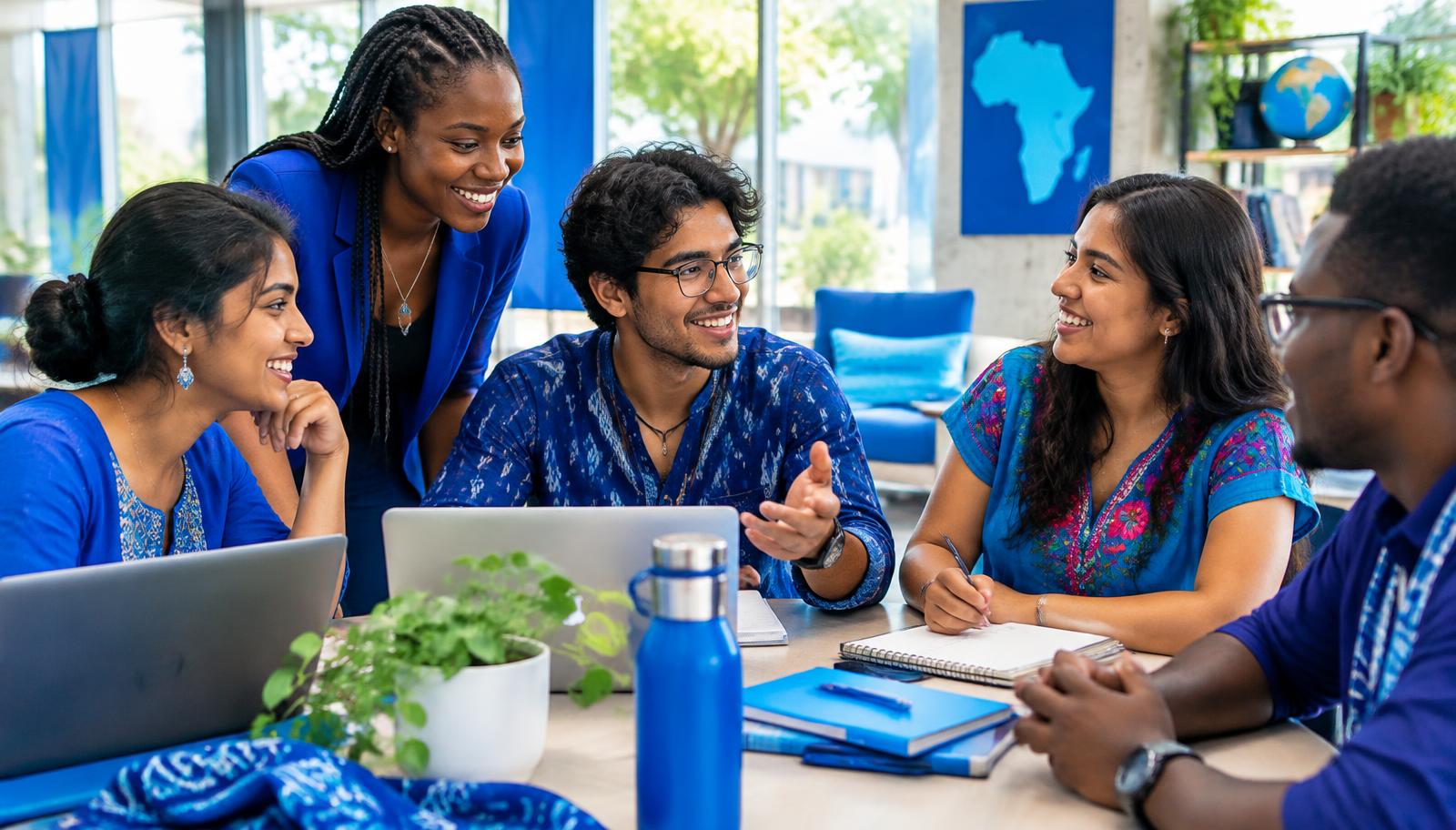
The first cohort is twenty groups of four to six students — roughly one hundred young people — drawn from Global South universities and mixed across countries where practical. Each group owns one project for twenty weeks, alongside their studies.
Three mentors per group
A faculty mentor holds academic rigour and signs off the credential; a field mentor grounds the work in reality and opens access to data and communities; a build mentor runs process and tooling.
Real work, real outputs
Groups collect their own data, build a model or product, test it and write it up. The output is a publishable research paper, a working prototype an organization can pilot — or both.
A credential that means something
Universities certify the work as a co-badged micro-credential or, where committees allow, academic credit. Grading carries pass and distinction, assessed on charter, data, build, write-up and viva.
Twenty weeks
How a project runs
Foundation
Group set up; one-page problem statement
Scoping
Signed project charter: question, method, data plan
Data
A clean, documented dataset in the commons
Build
A tested model or working product
Validate
Results checked with mentors and field partners
Write-up
Publishable paper or product documentation
Showcase
Viva, demo and presentation at a Global South forum
The first twenty projects
Real problems with a Global South edge, across the seventeen Goals
Finding the households welfare misses
Mapping the poorest households missing from social-protection rolls — unregistered, undocumented, or simply not found.
Mapping safety for women who move by informal transit
A safety-index map of routes and stops built from survey and geospatial data, surfacing the places and times that need attention.
Watching rural infrastructure cheaply
Low-cost sensors and an anomaly-detection model that flags a failing bridge or road before it gives way.
Cheap sensors, honest air-quality numbers
A calibration model that turns a network of drifting low-cost sensors into a trustworthy hyperlocal air-quality map.
Watching the community forest from space
Change detection on satellite imagery that flags deforestation for the community managing the forest.
The commons the whole cohort builds on
Every dataset, model and paper gathered into a shared, documented commons so the next cohort starts from a higher base.
Universities, mentors and funders: bring a problem, host a group.
The Fellowship is a working partnership between Global South youth, global universities and the organizations that hold the problems.